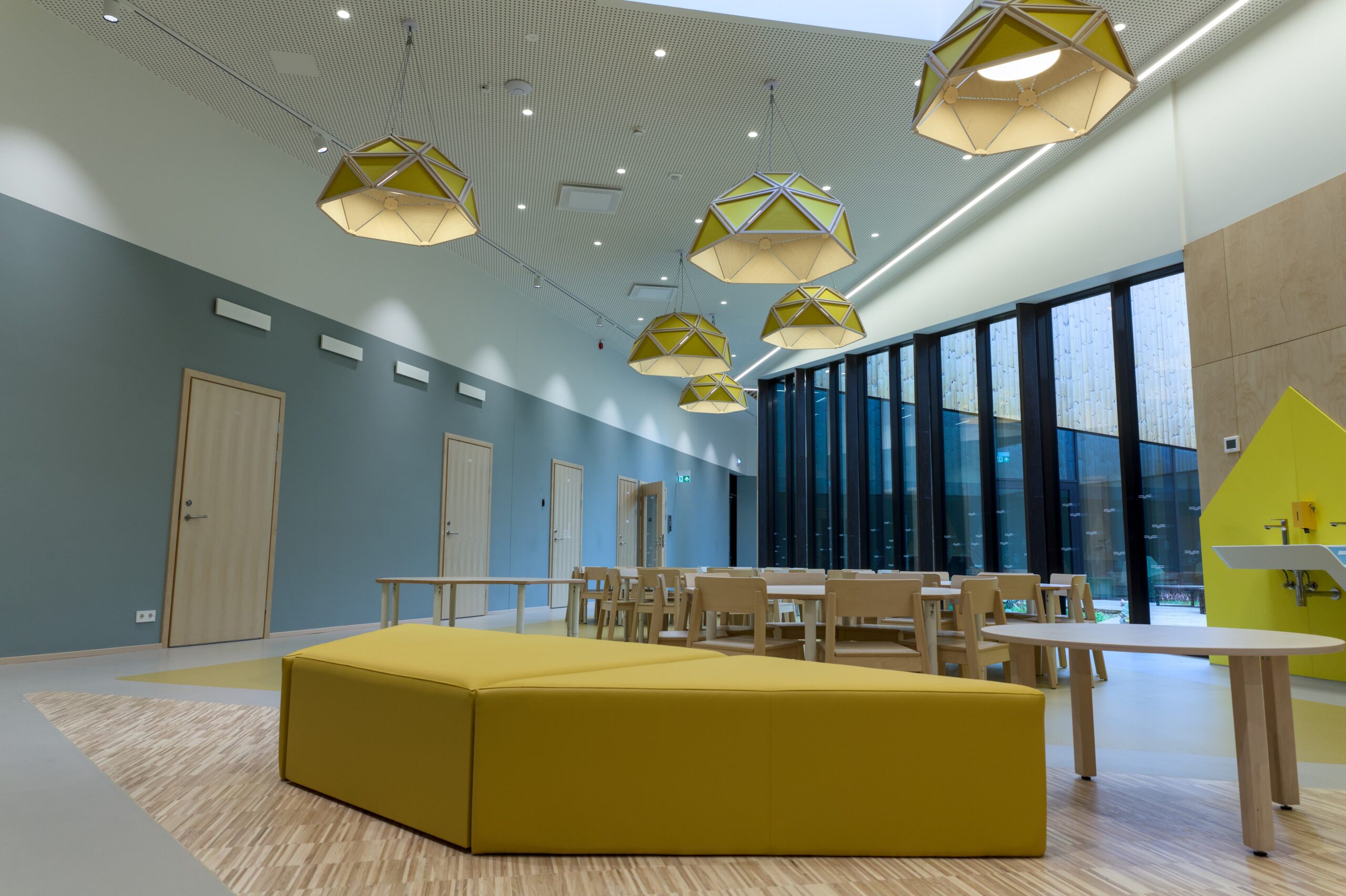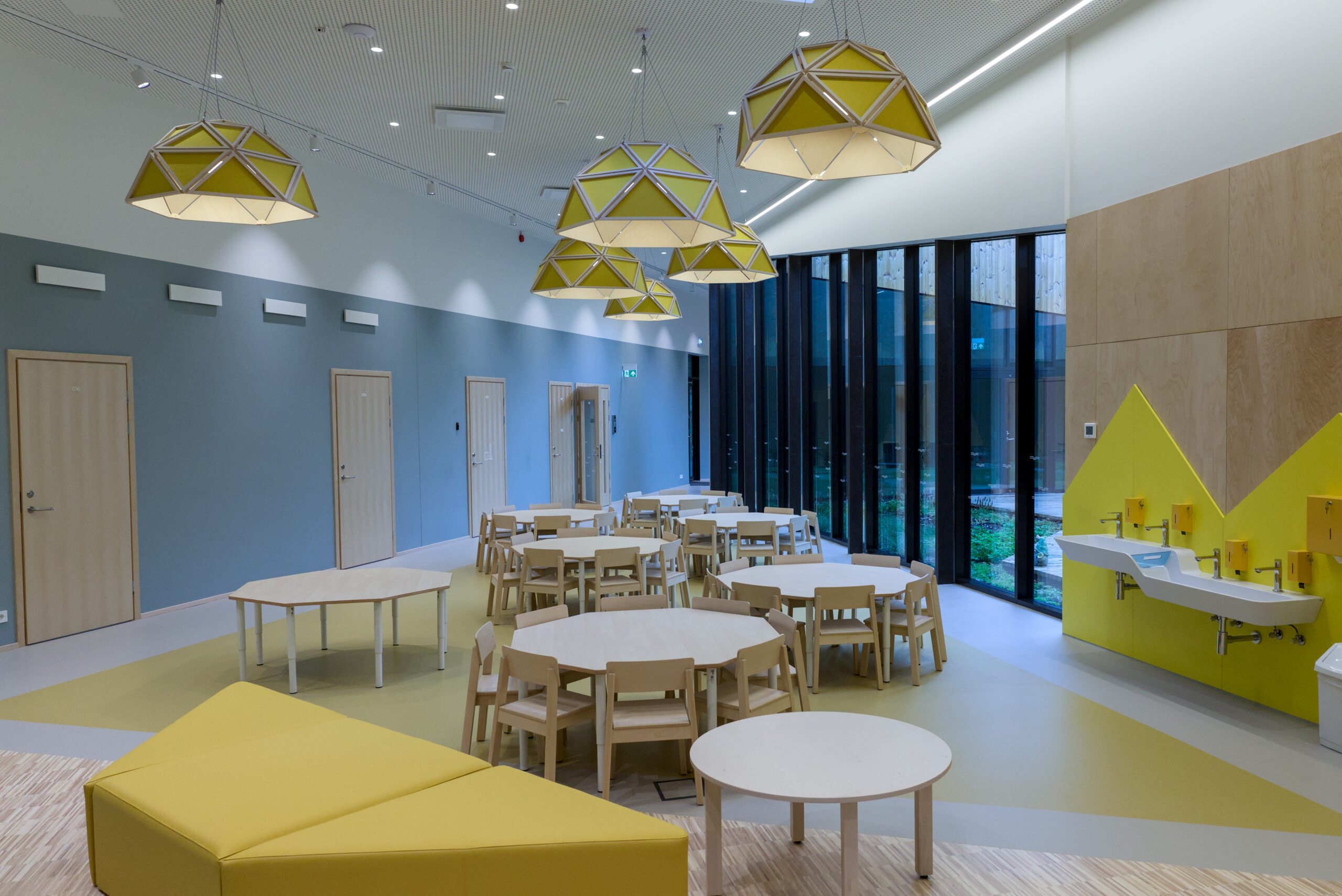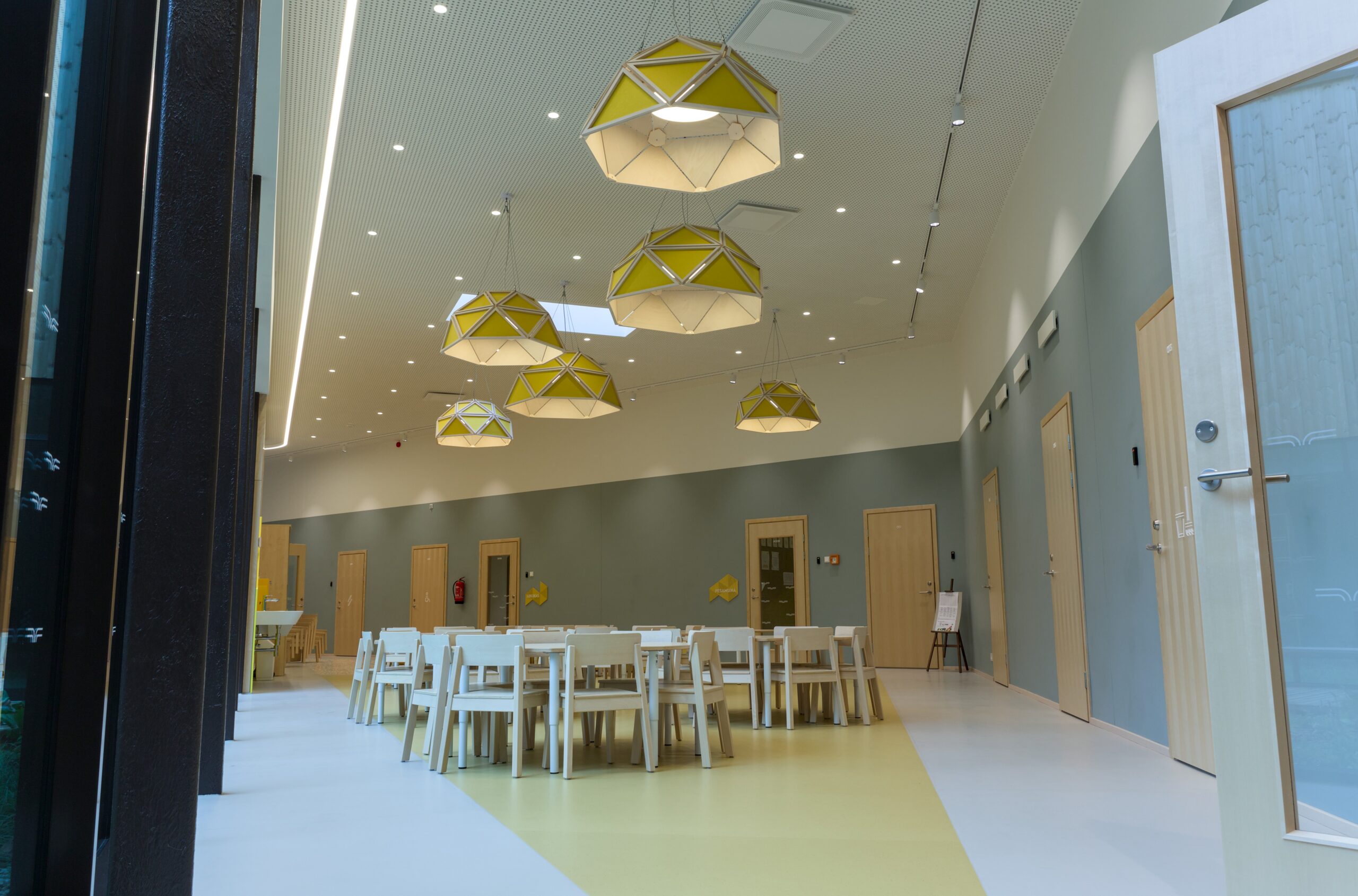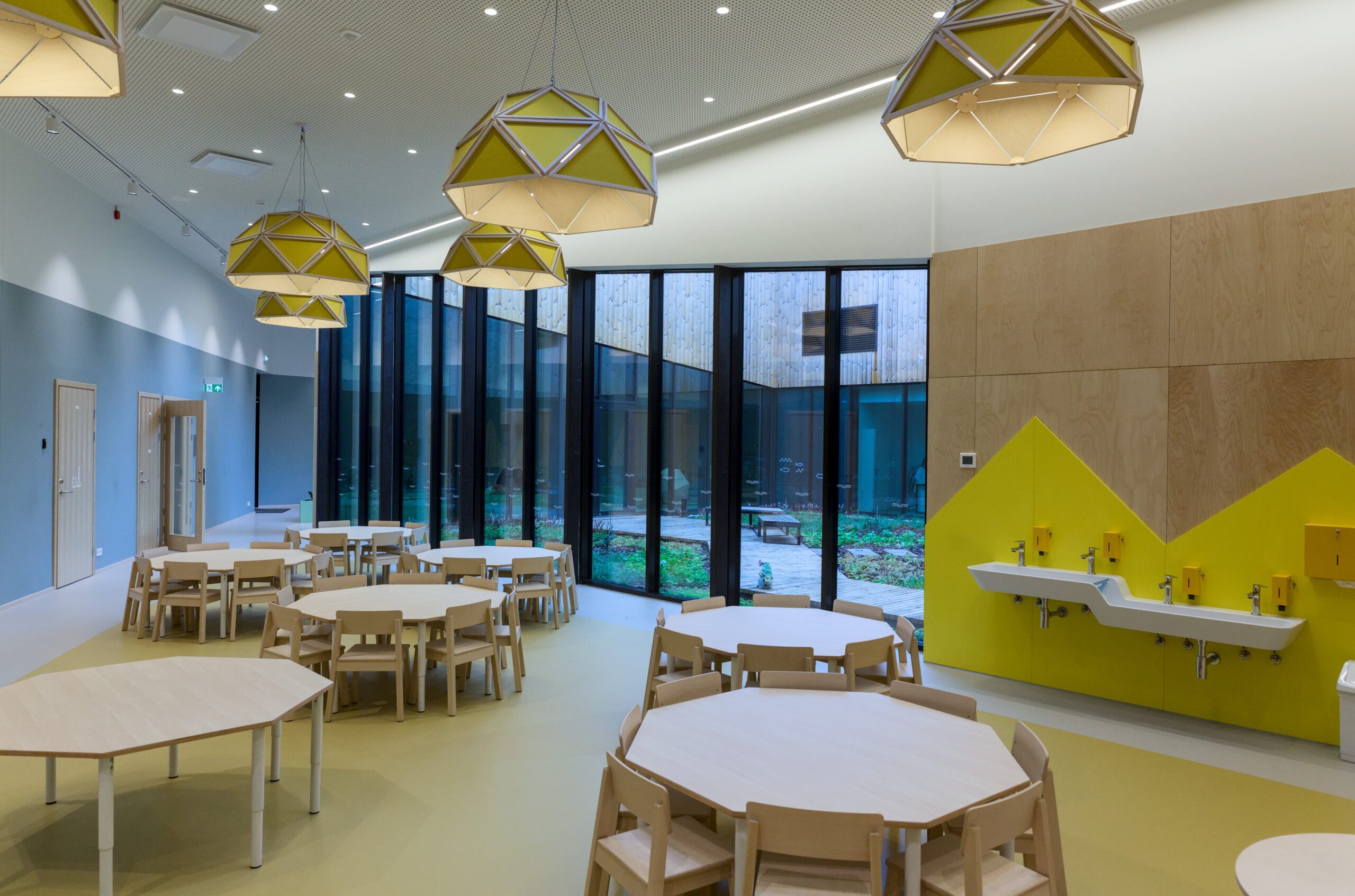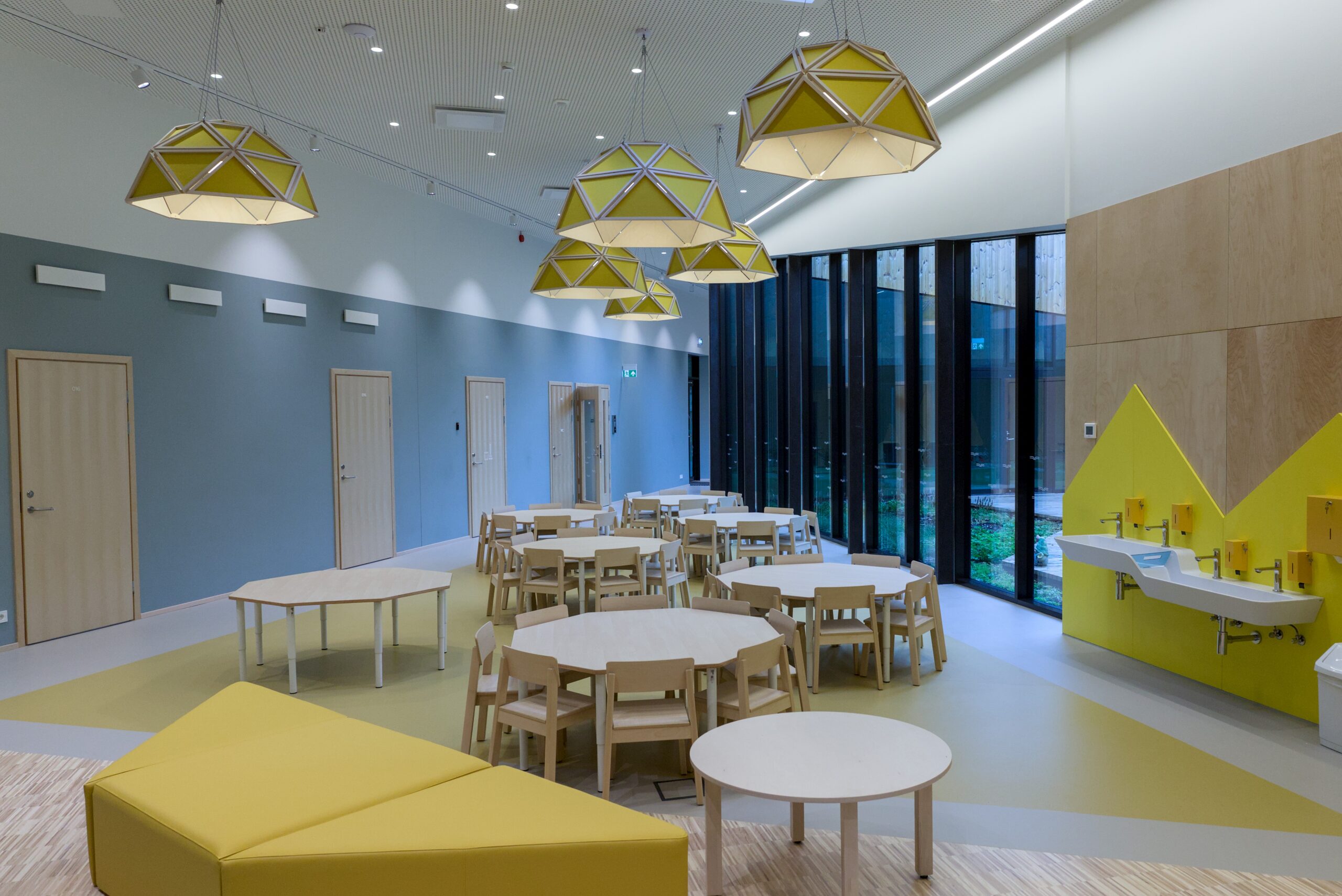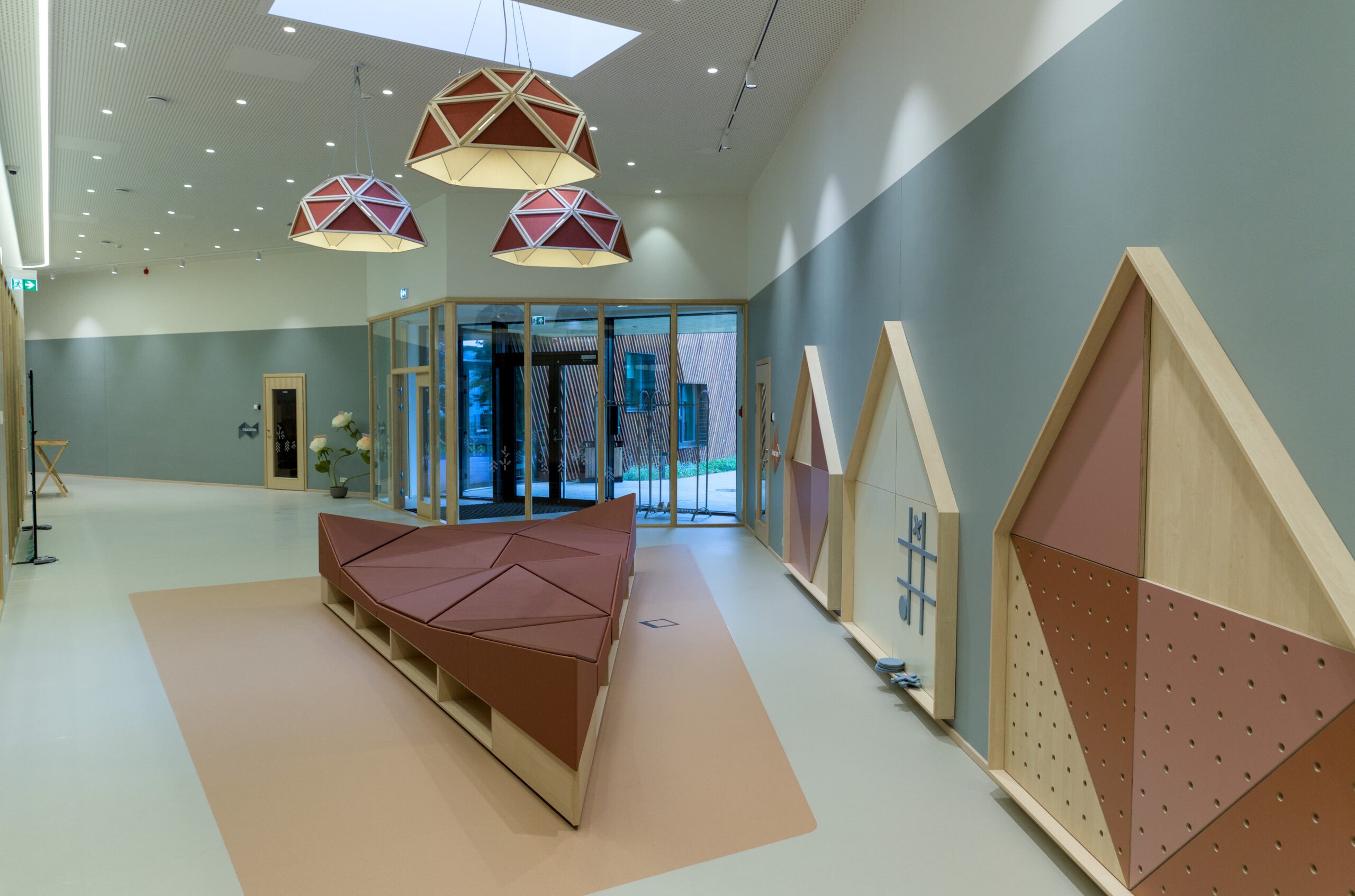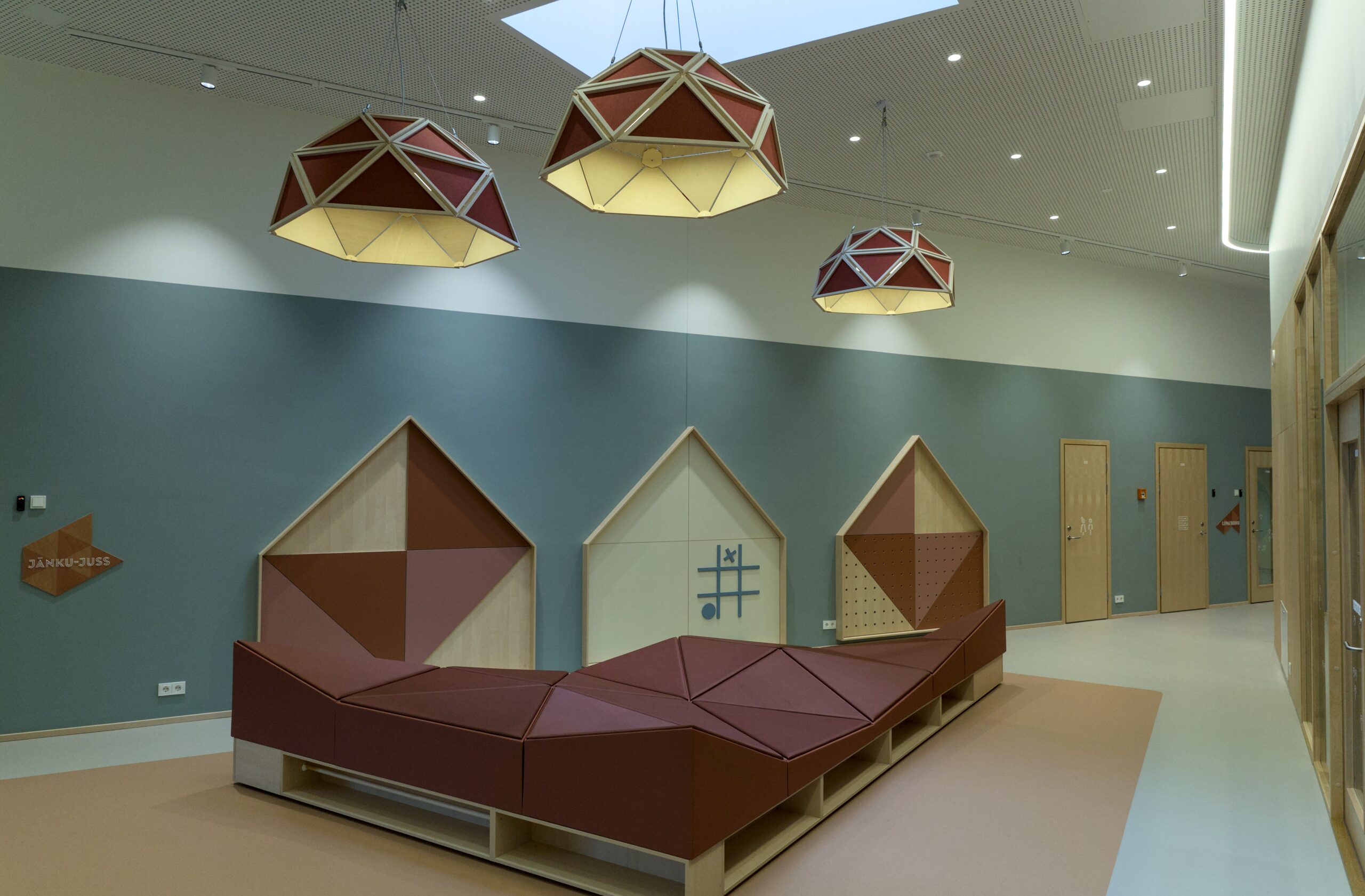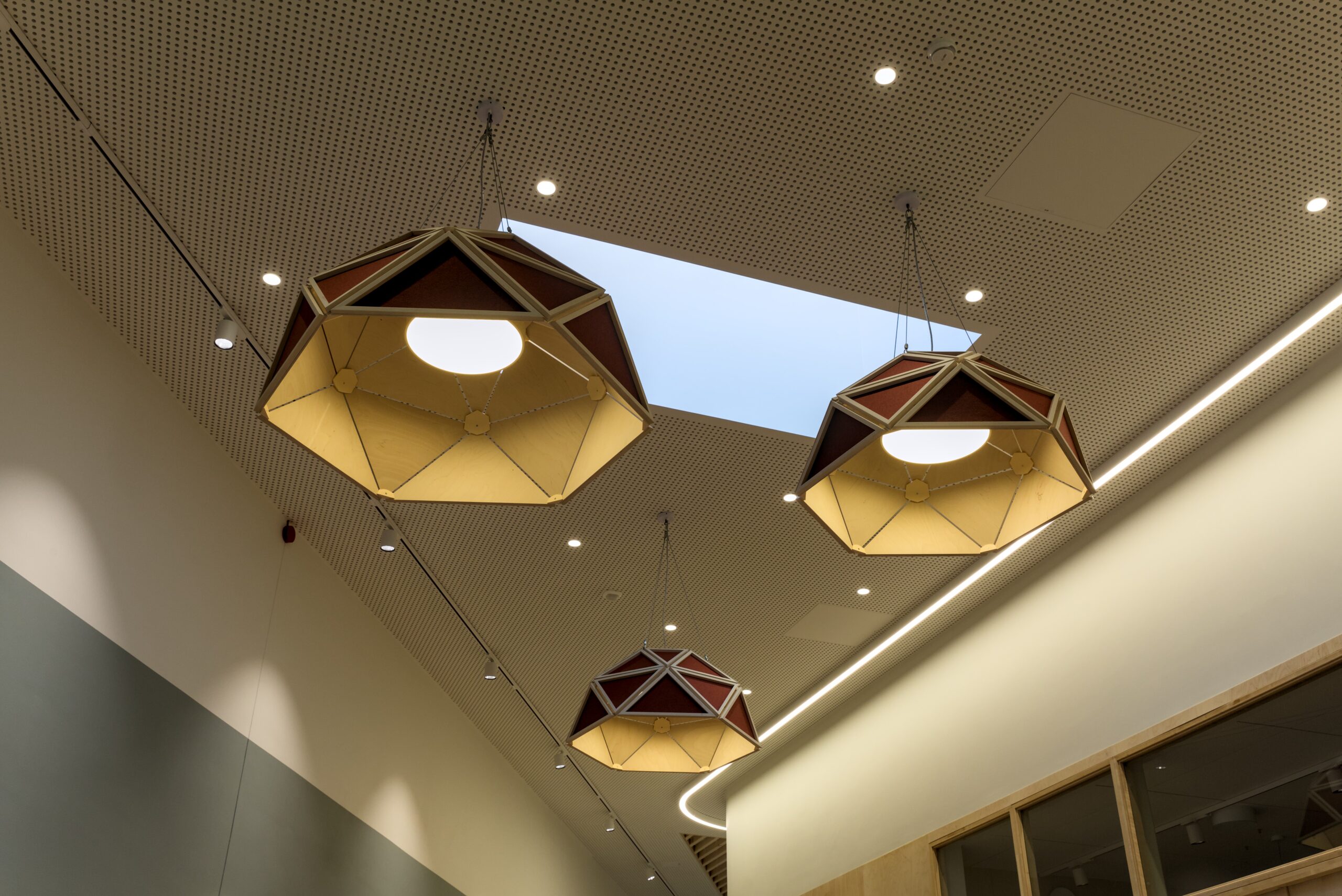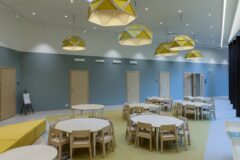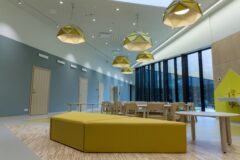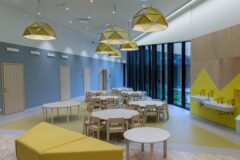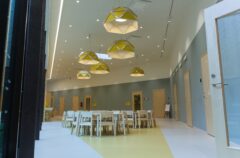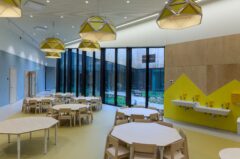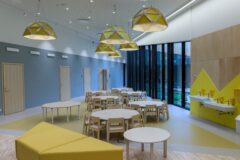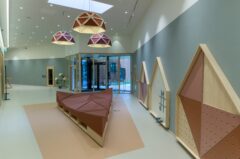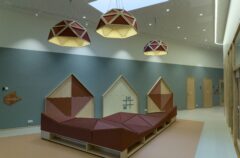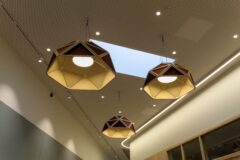



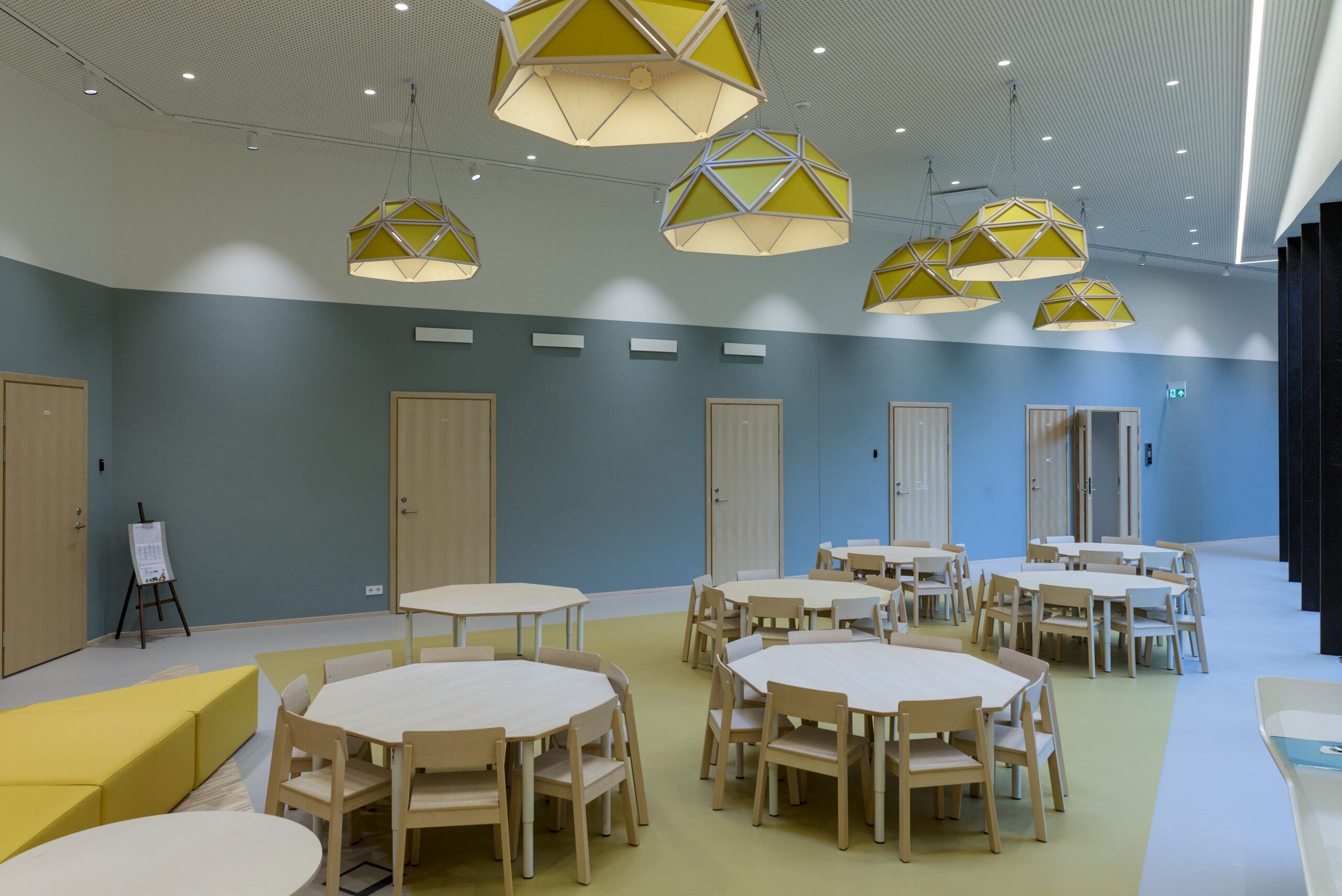
Nine large, faceted pendant lights draw the eye in the communal areas of the newly opened Punamütsikese Kindergarten in Võru. Kuidas saab visuaalsest kavandist valgusti, mille võib turvaliselt lae alla riputada? TSENTER provided the answer by developing the structural design, connections and suspension system for the lights, as well as selecting suitable materials.
While the concept by Kauss Architects defined the form and overall appearance of the lights, the work at TSENTER began with the preparation of technical drawings and the development of the load-bearing structure. The intended form had to be preserved while also ensuring the structural strength of the lights, their manufacturability and ease of installation, and compliance with the operational and fire safety requirements applicable to public spaces. The project budget also imposed certain constraints.
“A concept illustrates what the finished product should look like, but it does not yet provide a sufficient basis for manufacturing. Technical drawings must be prepared, a prototype built and different solutions tested. With more complex structures, certain components or connection methods may need to be developed entirely from scratch,” explains design engineer Erkki Naaris.
The first prototype was produced based on the technical drawings. Cutting and assembling the components revealed how the materials behaved, how precisely the parts fitted together, and which areas needed to be modified before the full series went into production. Joining the faceted elements required the most development work. Commercially available fittings were unsuitable for the required dimensions and angles, so the necessary components were designed and 3D-printed in-house at TSENTER. The custom-made components allowed the triangles to be joined into a strong, unified structure without the fixings dominating the appearance of the lights. After the prototype had been tested and the necessary adjustments made, production of the nine light fixtures began. The three-dimensional form was assembled from plywood triangles covered with bonded felt and wooden strips, with three suspension cables added. The custom lights vary in size and colour, complementing the geometric and playful character of the interior envisioned by the architects.
The development of the lighting for Punamütsikese Kindergarten demonstrates that prototyping is not merely an intermediate stage in product development, but a way to determine whether the proposed solution will work in practice before it goes into production. A product designed on paper or on a computer must be tested at full scale, as only then can it be determined how the materials behave, how the connections fit together and how the structure performs. At TSENTER, we help put ideas to the test and develop solutions that can be manufactured.